Digital Nomad Visas for Irish Citizens (2026)
Last updated July 21, 2026.
Irish citizens can already live and work anywhere in the EU and EEA, and across the UK under the Common Travel Area, so a dedicated digital nomad visa only matters when you want to base yourself outside those zones. The strongest options are non-EU destinations such as Thailand, Mexico, the UAE and Georgia, where the real planning question is not entry but where you end up tax resident.
Holding an Irish passport quietly removes most of the reason people chase a digital nomad visa in the first place. Under EU free movement you can settle in Spain, Portugal, Italy, Greece or any of the other 26 member states without a permit, register locally, and work remotely with no income threshold to clear. The Common Travel Area adds the UK, Channel Islands and Isle of Man on top, so Britain is open to you the same way it is to a British citizen. That means the whole category of "nomad visa" is really about the rest of the world: Southeast Asia, the Gulf, Latin America and the Caribbean, where an Irish tourist stamp runs out after 30 to 90 days and a longer stay needs paperwork. This guide covers where that paperwork is worth doing, and the Irish tax rules that decide whether you keep paying at home while you are away.
See every visa you qualify for on your income
Enter your income and passport once — get your ranked shortlist in about 30 seconds. Free, no signup.
Best destinations
- 1
 Thailand digital nomad visa
The five-year Destination Thailand Visa lets remote workers base themselves in a low-cost, well-connected hub, and Thailand only taxes foreign income you remit into the country in the year you earn it.
500,000 THB (≈ $14,900) in savings · 5 years, renewable
- 2
 United Arab Emirates digital nomad visa
Dubai and Abu Dhabi run a one-year virtual working visa and charge no personal income tax, so an Irish remote worker who becomes UAE tax resident can legitimately step outside the Irish net once the ordinary-residence tail expires.
$3,500/mo · 1 year, renewable
- 3
 Georgia digital nomad visa
Irish citizens can stay visa-free for a full year, and the Individual Entrepreneur small-business status taxes qualifying turnover at just 1%, making it one of the easiest low-tax bases in Europe's neighbourhood.
$2,000/mo · 1 year, renewable
- 4
 Mexico digital nomad visa
The temporary resident visa via proof of income or savings gives one to four years in a large, time-zone-friendly country, a strong fit for Irish freelancers working with US and European clients.
79,800 MXN/mo (≈ $4,550) · 1 year, renewable up to 4 years
- 5
 Colombia digital nomad visa
The V digital nomad visa is cheap and light on requirements, and cities like Medellin and Bogota offer a low cost of living with fast internet for stays of up to two years.
5,240,600 COP/mo (≈ $1,610) · 2 years, not renewable
- 6
 Costa Rica digital nomad visa
The Estatuto de Nomada Digital gives a year, renewable to two, and exempts qualifying foreign income from local tax, which suits Irish workers wanting a stable Central American base.
$3,000/mo · 1 year, renewable up to 2 years
- 7
 Barbados digital nomad visa
The 12-month Welcome Stamp is straightforward, English-speaking and levies no local income tax on the visa, a natural Caribbean option for Irish applicants.
$50,000/yr · 1 year, renewable
- 8
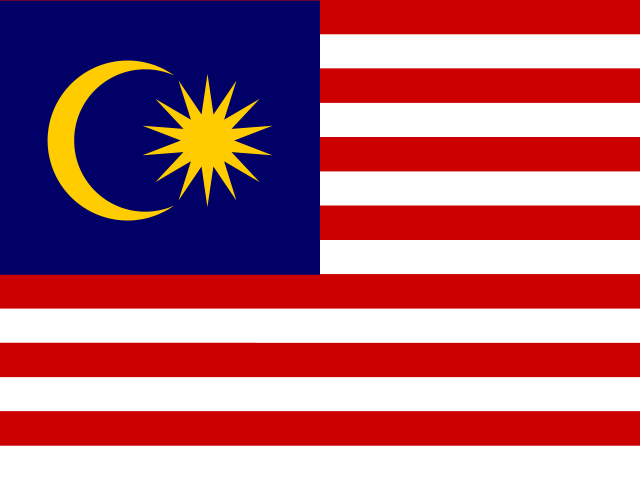 Malaysia digital nomad visa
The DE Rantau Nomad Pass covers Kuala Lumpur and beyond with modest income requirements and English widely spoken, plus a territorial system that generally leaves foreign income untaxed.
$24,000/yr · 1 year, renewable up to 2 years
- 9
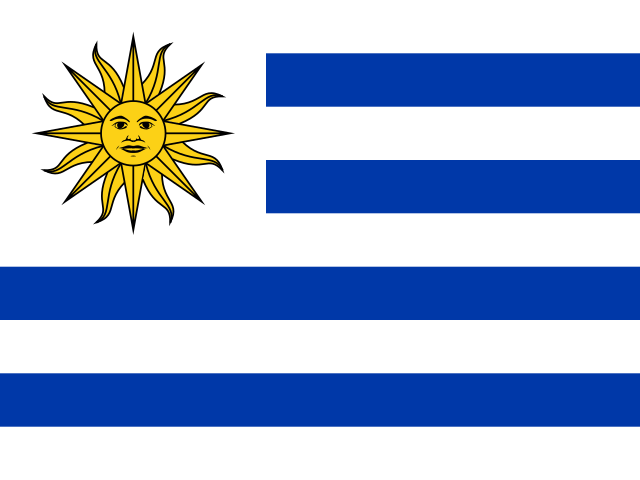 Uruguay digital nomad visa
Uruguay's nomad permit is simple and can lead to residency and a tax holiday on foreign income, offering a safe, stable South American base in a European-friendly time zone.
No fixed income floor · 6 months, renewable up to 1 year
- 10
 Mauritius digital nomad visa
The Premium Visa gives a renewable year on the island with no local tax on foreign income kept offshore, a comfortable, English- and French-speaking Indian Ocean base.
$1,500/mo · 1 year, renewable
Your home-country tax obligations
Leaving Ireland does not end your Irish tax exposure on the day your flight departs. You are Irish tax resident for a year if you spend 183 days or more here in that calendar year, or 280 days or more across two consecutive years (with at least 30 days in each). A day counts if you are present at any point in it. If you were resident for the three years before you go, you also stay "ordinarily resident" for the following three years, which keeps you liable on worldwide income beyond a small foreign-earnings exemption until that tail runs out. Domicile matters too: if you are Irish-domiciled and resident, Ireland taxes your worldwide income; if you are resident but not Irish-domiciled you can use the remittance basis and are only taxed on foreign income you bring into the country. Ireland has an extensive double-tax treaty network, so income taxed in your host country is generally credited rather than charged twice, and split-year relief can cut your final resident year on employment income. High-net-worth individuals with substantial Irish assets can also face the annual domicile levy. None of this is tax advice — confirm your own position with an Irish adviser and one in your destination before you move.
General information, not tax advice. See our nomad visa taxes guide and consult a qualified adviser.
What irish citizens typically need
- Irish passport valid for the whole stay, usually with at least 6 to 12 months beyond entry
- Proof of remote income: an employment contract with a non-local employer, or client contracts and invoices if you freelance
- Recent bank statements showing the required income or savings, often three to six months
- Private health insurance covering the destination for the full visa period
- Police clearance / Garda vetting certificate, frequently apostilled and issued within the last three to six months
- Passport photos and proof of accommodation or an address in the destination
Where your Irish passport already works
Inside the EU and EEA you are not a nomad-visa applicant at all. You have the right to enter, reside and work, and the only step is local registration once you settle. Spain, Portugal, Italy, Greece, Croatia and the rest of the bloc are open to you without meeting any income floor, which is precisely the barrier their nomad visas exist to enforce for non-EU nationals.
The Common Travel Area sits alongside EU rights and predates them. It lets Irish citizens live, work and access services in the United Kingdom with no visa and no time limit, and the arrangement survived Brexit intact. For an Irish remote worker, that makes the UK a domestic move rather than an immigration one.
- EU/EEA: free movement, no visa, no income threshold
- United Kingdom: full access under the Common Travel Area
- Everywhere else: a tourist stamp of 30 to 90 days, then a nomad visa if you want to stay
Picking a base outside Europe
Because Europe is already covered, the destinations that earn their paperwork are the ones that give you something an EU move cannot: a different time zone for US-facing work, a lower cost of living, or a zero-tax residence. Split the shortlist into two groups. Tax-free hubs like the UAE and, in practice, Barbados and Mauritius suit people whose Irish ordinary-residence tail has ended and who want to reset where they are taxed. Value bases like Thailand, Mexico, Colombia and Georgia keep monthly costs low while you keep earning in euro or dollars.
Whichever you choose, entry is the easy part. The harder question is tax residence, because you can hold a nomad visa and still be treated as Irish tax resident if you spend too much of the year back home. Plan the calendar, not just the visa.
Leaving Ireland cleanly
A clean exit means watching two counts. Stay under 183 days in the year of departure and under 280 across two years to break residence, and remember the three-year ordinary-residence tail that follows if you were resident for the previous three years. During that tail Ireland can still tax your worldwide income, so genuinely low-tax planning often only starts to bite in year four abroad.
Tell Revenue you have left, claim split-year relief on employment income where it applies, and keep proof of your days out of the country in case your status is queried. If you are not Irish-domiciled, the remittance basis can shelter foreign income you do not bring home. These are the mechanics an Irish adviser will walk you through before you commit to a destination.
FAQ
Do Irish citizens need a digital nomad visa to live in Spain or Portugal?
Can Irish citizens work remotely in the UK without a visa?
When do Irish citizens stop being tax resident in Ireland?
Which digital nomad visa is best for Irish citizens?
Will Irish citizens pay tax twice, at home and abroad?
What documents do Irish citizens need for a nomad visa?
Sources
Every income threshold, duration, fee, and rule on this page traces to an official government or consulate source. Last verified July 21, 2026.
- Citizens Information (Ireland) — Tax residence and domicile in Ireland ↗
- PwC Worldwide Tax Summaries — Ireland: Individual residence ↗
- Citizens Information (Ireland) — Common Travel Area between Ireland and the UK ↗
See our verification methodology and themaster source list.